Pasar al contenido principal

IofC 2026 Luxembourg Peace Prize Award

Datum

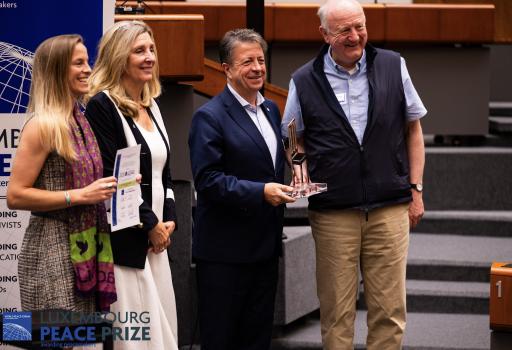
Celebrate with us Talia Smith and Chris Evans who represented the global IofC fellowship while receiving the 2026 Luxembourg Peace Prize Award.

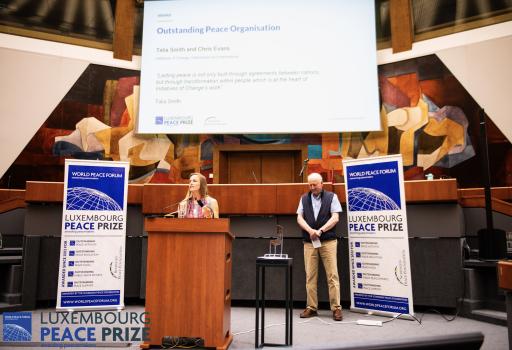
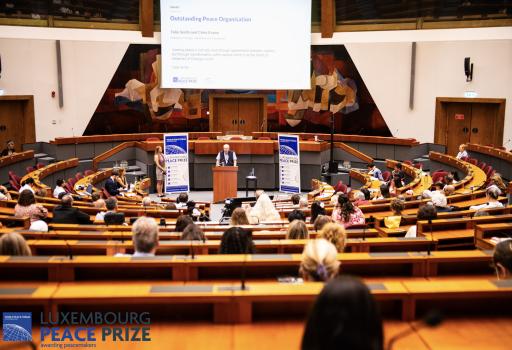
The 14th Annual Peace Prize ceremony took place in the historical Hemicycle, at the European Convention Center of Luxembourg, hosting distinguished peacemakers representing a diverse mix of activists, educators, leaders, and artists from around the world. 

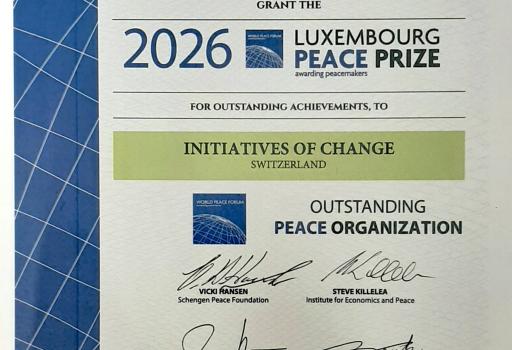
Initiatives of Change has been recognized as an 'Outstanding Peace Organization' for its model of peacebuilding grounded in listening, accountability and moral courage.


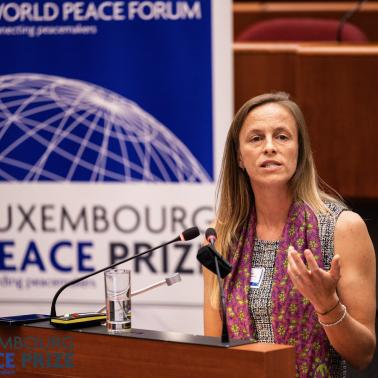
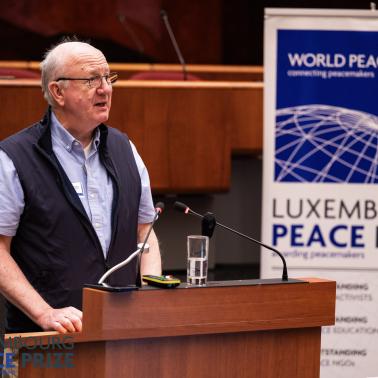
Talia Smith (Trustbuilding program manager) and Chris Evans (International Council member) attended the festive event on behalf of Initiatives of Change.

TALIA SMITH

Peace is built in human relationships

It’s an honour to receive this Luxembourg Peace Prize on behalf of the many colleagues, volunteers and friends of Initiatives of Change — past and present — whose courage and commitment have made this work possible. This award belongs to all of them.

And this is truly a Legacy Award.

Our story began in the 1920s. In the 1930s, as nations across Europe rearmed for war, our movement became known as Moral Re-Armament — calling instead for moral and spiritual rearmament. 

After the devastation of the Second World War, our focus increasingly turned toward reconciliation: helping former enemies rebuild trust and imagine a shared future.

In 2021, we became Initiatives of Change — or IofC —the heart of our work has remained the same.

For over a century, we have been guided by one simple but deeply challenging belief: that change starts with oneself. That societies change when people are willing to reflect honestly, and take responsibility for the role they can play in healing division.

Today, in a world marked by polarisation, fear and violence, this message feels more urgent than ever.

Peace is not built only through treaties or institutions. It is built in human relationships. It is built when people who distrust one another choose to listen instead of condemn. 
When communities acknowledge historical wounds instead of denying them. When people move from blame to responsibility.
 

Click here to read Talia's Full Speech
 

CHRIS EVANS

De-humanising people is a hopeless way to solve problems

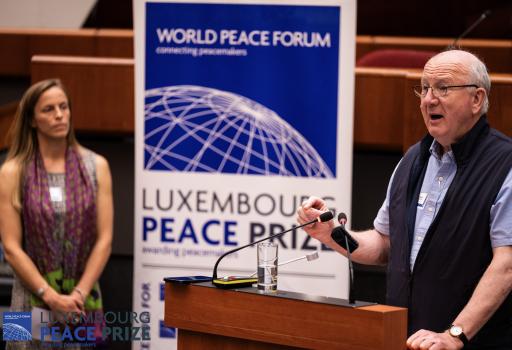
2026 Luxembourg Peace prize Awards - Chris Evans

What a privilege to be here, and to receive this award on behalf of so many friends and colleagues whose work it recognises. Thank you very much.

The other day I was privileged to see a pre-release showing of a new film. It is directed by a Palestinian from Gaza whose extended family there has been decimated in the bombing. Day after day, as he worked on the film, he would receive devastating news of yet more relatives dying in the rubble.

Yet in the film he tells the story, mostly in their own words, of a British woman whose father, a Member of Parliament, was killed by a bomb intended to kill Mrs Thatcher in Brighton, England, and the Irishman who planted the bomb.

At one point the Irishman describes how he and his friends demonised Mrs Thatcher and her colleagues, making them out to be less than human. “If we hadn’t done that”, he says, “we could never have killed them”. These days, we might call this “othering” – de-humanising another person or another group and painting them as so evil and dangerous that they come to be seen as the cause of our problems and all kinds of extreme measures against them are justified.

Click here to read Chris' Full Speech

About the Schengen Peace Foundation, World Peace Forum and Luxembourg Peace Prize

For the fourteenth consecutive year, the Schengen Peace Foundation and the World Peace Forum awarded the prestigious Luxembourg Peace Prize to outstanding peacemakers from around the world in Luxembourg.

The Schengen Peace Foundation was founded in 2005 and approved in 2007 by His Royal Highness Grand Duke Henri as a Peace Think Tank dedicated to supporting peacebuilding initiatives.

In the spirit of Schengen — a symbol of open dialogue, cooperation, and unity across borders — the Foundation initiated the World Peace Forum, a global platform for peace activists and peace initiatives. This annual multidisciplinary gathering brings together peacebuilders from around the world to meet, exchange ideas, and strengthen their collective impact.

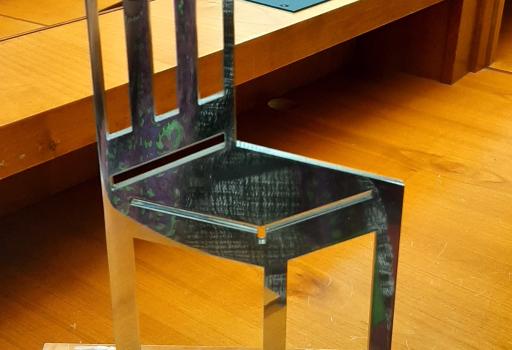
The Luxembourg Peace Prize was established in 2012 to recognize exceptional contributions to peace across multiple fields of action. Initially, laureates received a bronze medal depicting Nelson Mandela. Since 2017, laureates have received a sculpture of a three-legged chair created by Colombian artist Duvan Lopez. The sculpture symbolizes that each laureate becomes the fourth leg of the chair at the table of peace, helping to support and strengthen the global peace movement. The original sculpture is housed in the library of the University of Luxembourg. 

Laureates are recognized in 13 categories honoring outstanding achievements in advancing peace.