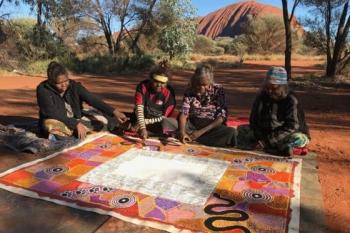
To help set the context of the need for this trustbuilding project, on 30 January, a group of 22 visitors, including trustbuilding project members, came to Cherbourg to meet the community. Their purpose was to understand better the legacy of past policies against Australia’s First Nations, and begin a conversation about what can be done in the present day. The Cherbourg Aboriginal Settlement, 270 km northwest of Brisbane on the lands of the Wakka Wakka people, became a site for forced resettlement in the early 20th century, under the 1897 Queensland law on Aboriginals Protection and Restriction of the Sale of Opium Act. Under the policy of forced removal, by the 1930s there were 28 different First Nations represented among Cherbourg’s population of 900 people. This meant those who were not Wakka Wakka people, the traditional landowners, were disconnected from their culture and language. The men were sent to clear land and do farm labour for pastoralists and nearby property owners, while the women were hired out as domestic staff, in conditions akin to prison work. Many children were further removed from their families to live in school dormitories, where punishments were severe and living conditions poor.
Australia trustbuilding project launching soon
Datum
Soccer Match
A journey towards understanding
Soccer Match
Recognition and healing
On 26 May1999, Queensland Premier Peter Beattie apologized in Parliament to Aboriginal and Torres Strait Islander people, expressing ‘deep sorrow and regret’ for its past policies of separating Indigenous children from their families. The apology recognised the impacts of these policies have continued in the form of intergenerational trauma in the Cherbourg community.The Queensland government also acknowledged past wage discrimination against Aboriginal workers, and provided some compensation.
'While the government apology recognised that the impacts of these policies have continued in the form of intergenerational trauma in the Cherbourg community, more follow-up practical action is needed.'
Barbara Lawler, IofC Elder