Workshop content and curriculum
The framework used for the workshop in Quebec is based on the curriculum originally designed for the Community Trustbuilding Fellowship (CTF) in Richmond, USA. Adapting the materials from the training in Richmond to the local context was mainly focused on finding the underlying guiding principles of the theory of change, and building a theoretical framework adapted to the Québec context, as the basis for the structure of the curriculum.
Adapting the curriculum was a challenge in various ways. First, the context is different, and even if some of the divides are similar in nature, they manifest themselves differently in the Quebec/Canadian context. Notably, the language issues that play a large role in shaping identity in Quebec create narratives regarding colonial and racial histories. These play out differently in the Canadian context, even though the impact may be similar to what is seen in other parts of the Americas, including the United States. Relationship to conflict is another issue that the team was mindful of.
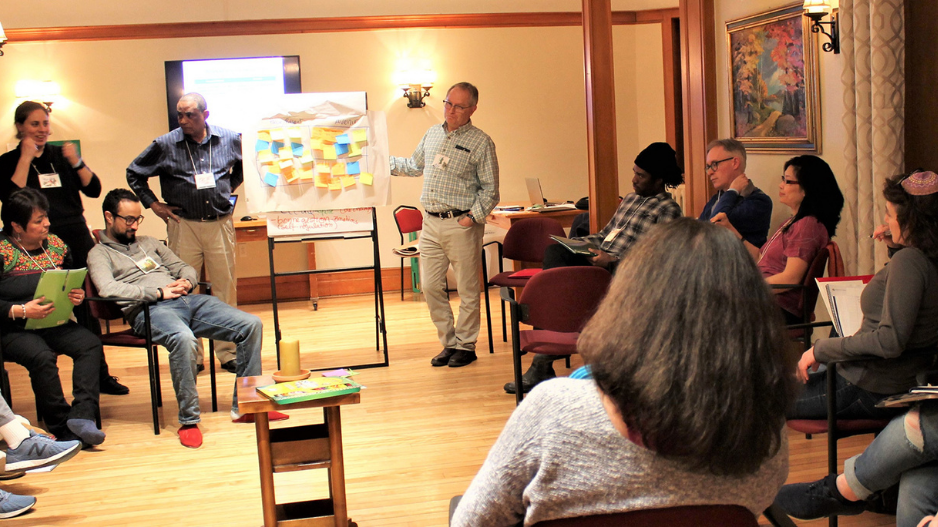
The participants were introduced to the CTF background, the Trustbuilding Program framework, IofC four standards, personal and social changes. Through collective reflections, the personal Identities – considerations of our own role, personal values, privileges, and biases, in relation to structures – was explored with different workshops and approaches. Then the cohort examined the history and collective narratives in relations to personal narratives. With exercises like ‘the historical timeline exercise’, the participants revisited Quebec/Canada’s History to acknowledge and work on healing of exclusions and historical wounds. Reverend Sylvester (Tee) Turner also gave a touching talk about the three-legged stool of Reconciliation.
As racism and colonialism were chosen as important focuses to address, related external workshops were organized for cohort; an Indigenous-led organization, Mikana, was approached and presented a workshop to raise awareness on the realities of Aboriginal people in Canada. Marie-Émilie Lacroix, from the Innu First Nation, was asked if she could lead an experiential workshop called the ‘blanket exercise’, designed to walk through the history of colonialism’s lasting and deep impacts on first peoples. These experiences lead to a better understanding of bias and prejudice that First Nations experience from the province and country, and a lot of aspects can be extrapolated to discrimination and racism of other minority groups. An author and publisher who focuses on giving voices to African and Caribbean authors, who write about everyday struggles, Natacha Odonnat, led a workshop on the importance of imagination in creating a trusti ng world.